
NewClimate Institute led the case study on ‘Beyond emissions accounting: The role of transition targets in guiding automakers’ decarbonisation’ in the Lead the Charge 2026 Leaderboard Report. The chapter summarises why emissions-based targets alone are inadequate to drive real change and how transition targets can better steer value-chain decarbonisation.
Drawing on insights from the Corporate Climate Responsibility Monitor 2025, this case study explains why GHG emissions reduction targets alone are insufficient for automakers to drive real change and demonstrates how transition targets can better steer decarbonisation across the value chain.
Emissions reduction targets: an unreliable foundation to steer decarbonisation
Automakers rely on emissions inventories that are incomplete, inconsistent or based on flawed assumptions, particularly regarding use-phase emissions and upstream materials such as steel, aluminium and batteries. Many companies also depend on carbon credits to meet longer-term targets.
These shortcomings make it difficult for stakeholders to determine whether automakers are making meaningful progress, limiting the effectiveness of emissions-based targets as tools for driving action aligned with a 1.5°C pathway.
“When accounting gaps blur the picture, transition targets bring clarity. By tracking zero‑emission sales and near‑zero steel, aluminium and batteries, we can distinguish genuine leadership from greenwashing - consistently and across years.” - Frederic Hans, NewClimate Institute
Why transition targets are needed alongside emissions-based targets
Emissions reduction targets do not track the concrete shifts that determine automakers’ real-economy decarbonisation. The case study therefore proposes transition targets as a necessary complement.
Transition targets focus on key sectoral transitions, for example scaling zero-emission vehicle (ZEV) sales and increasing the procurement of near-zero steel, near-zero aluminium and low-carbon batteries.
By incentivising and measuring these shifts directly, transition targets create clearer accountability for near-term action, reduce reliance on opaque accounting practices and make progress comparable across companies and years. They also help stakeholders distinguish claims of ambition from tangible, verifiable change along the value chain.
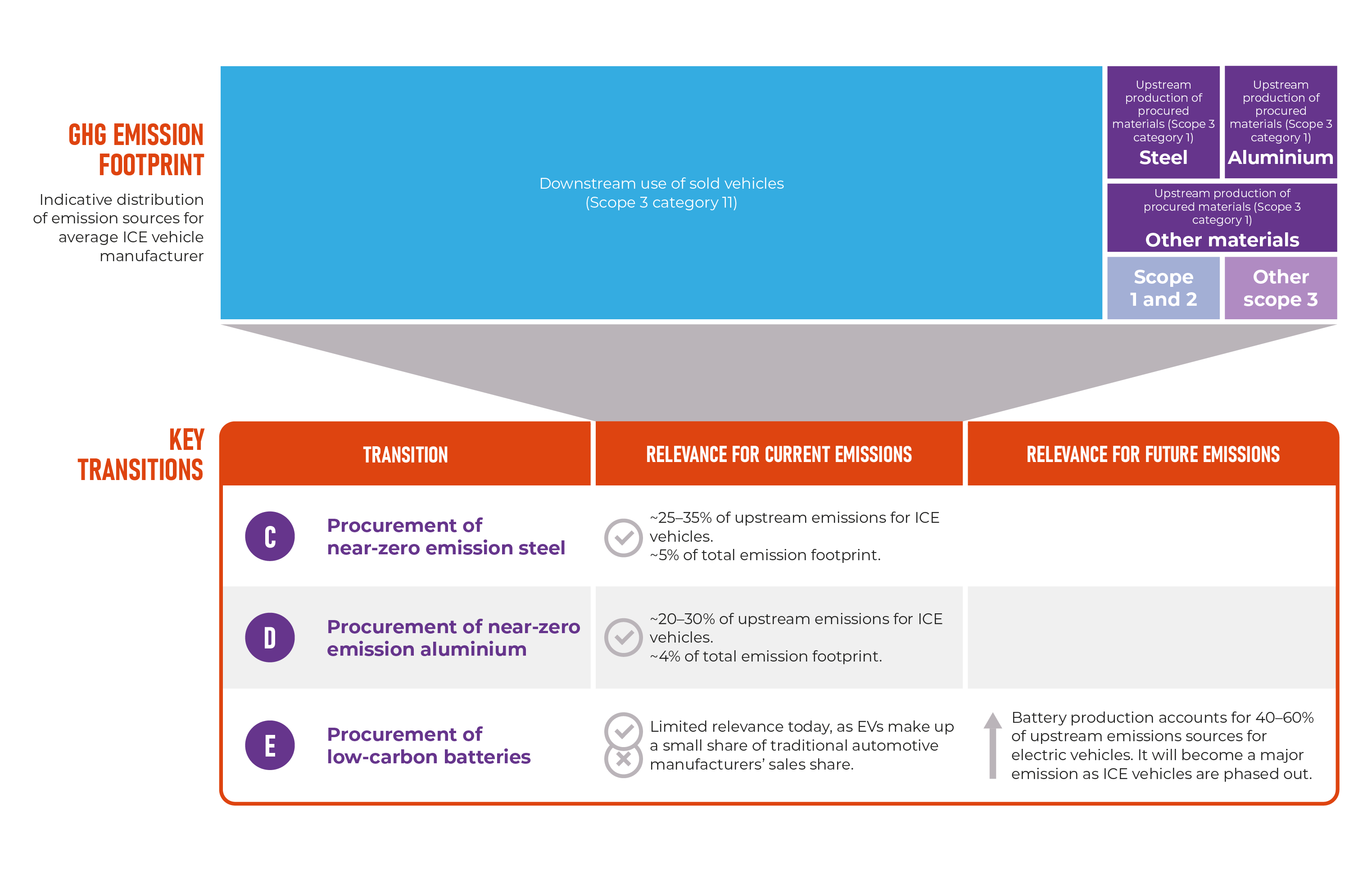
Figure 1: Overview of emission sources and key transitions along the automakers’ upstream value chain.
How to operationalise transition targets in practice
The case study outlines three steps for implementing transition targets:
- Identify the key emissions hotspots beyond the use phase, particularly upstream materials (steel, aluminium, batteries).
- Define actionable metrics that track those shifts, such as the share of ZEV sales, the share of near-zero steel and aluminium procured and battery GHG intensity (per kWh).
- Set 1.5°C-aligned benchmarks for each metric, drawing on the literature and new analyses where needed.
This approach enables transparent tracking, supports procurement and investment decisions and equips investors, regulators, courts and civil society to assess leadership credibly. With multiple initiatives piloting methodologies and sector guidance forthcoming, 2026 presents a timely opportunity to mainstream transition targets alongside emissions-based targets.