
In November 2025, a group of scientists published a statement on the state of COP30 negotiations, calling for robust roadmaps to phase out fossil fuels and end deforestation. Crucially, they warned against treating forest protection as a substitute for real emissions reductions through offsetting: ‘Forest protection cannot be used as an offset. Standing forests cannot be an excuse to keep burning fossil fuels’.
And yet, COP30 evolved into a major marketplace for offsets under Article 6 of the Paris Agreement. Developing countries promoted themselves from their national pavilions as ideal hosts for Article 6 activities. Meanwhile, the EU adopted a contribution of up to 5% of 1990 emissions to be included in its 2040 target. In doing so, the EU effectively positioned itself as the single largest buyer of Article 6 credits.
Article 6 is intended to support implementation of Nationally Determined Contributions (NDCs) – but only in ways that raise overall climate ambition rather than shifting mitigation efforts elsewhere. As Article 6 markets expand rapidly, a central question is whether the current mechanism drives genuine emissions reductions or simply allows countries to meet their targets on paper. In the absence of robust safeguards, offsets risk being increasingly used as a substitute for domestic climate action and developing countries may be pushed into selling low-cost mitigation options to wealthier countries instead of using them to accelerate their own decarbonisation.
In this blog post, we examine how Article 6 is being implemented and outline key risks that could undermine climate ambition – unless safeguards are strengthened and clear limits are placed on the role of offsets (Article 6 credits) in meeting climate targets.
Article 6: higher climate ambition in theory, mitigation deterrence risks in practice
Article 6 of the Paris Agreement was established to promote voluntary cooperation between countries and support efforts to narrow the global ambition gap – the difference between current national climate targets and the emissions reductions needed to meet the Paris temperature goals. It enables nations to transfer emissions reductions, known as ‘mitigation outcomes’, across borders.
In theory, developed countries would go beyond meeting their own domestic climate targets by purchasing Article 6 credits to finance additional emissions reductions in other countries. At the same time, developing countries would receive finance and support to strengthen their climate ambition through the additional resources generated by these cooperative approaches. The aim is to increase overall global ambition for climate action, as reflected in Article 6 of the Paris Agreement: ‘Parties can choose to pursue voluntary cooperation to allow for higher ambition’.
However, implementing Article 6 in a Paris-aligned way is challenging due to gaps in governance arising from the Paris Agreement’s bottom-up structure. Each country determines its own emissions targets, and there is no mandate for countries to assess or police one another’s targets. In the context of Article 6, this means that there is no mechanism to verify or validate how countries use it. There are no strict safeguards to prevent countries from using Article 6 as an offset mechanism – in other words, as a substitute for domestic emissions reductions.
This allows wealthier countries to meet part of their NDCs by purchasing Article 6 credits instead of cutting emissions at home, creating a considerable risk of mitigation deterrence – the reduction or delay of near-term domestic mitigation efforts. It may also lead developing countries to sell a significant share of their mitigation potential abroad rather than using it to strengthen their own ambition.
Our analysis of the stated intentions in NDCs and long-term strategies across 42 major countries tracked by the Climate Action Tracker indicates a tangible risk of mitigation deterrence. Among these countries, 14 indicate that they intend to use Article 6 to achieve their NDCs. However, it is difficult to determine whether using Article 6 has led to higher or lower ambition in practice, as this depends on many other factors. Only three countries (Kenya, Peru and Thailand) explicitly state that they plan to use Article 6 to increase the ambition of their NDCs. Three countries (Brazil, Morocco and Senegal) link the use of Article 6 to achieving the conditional share of their NDCs.
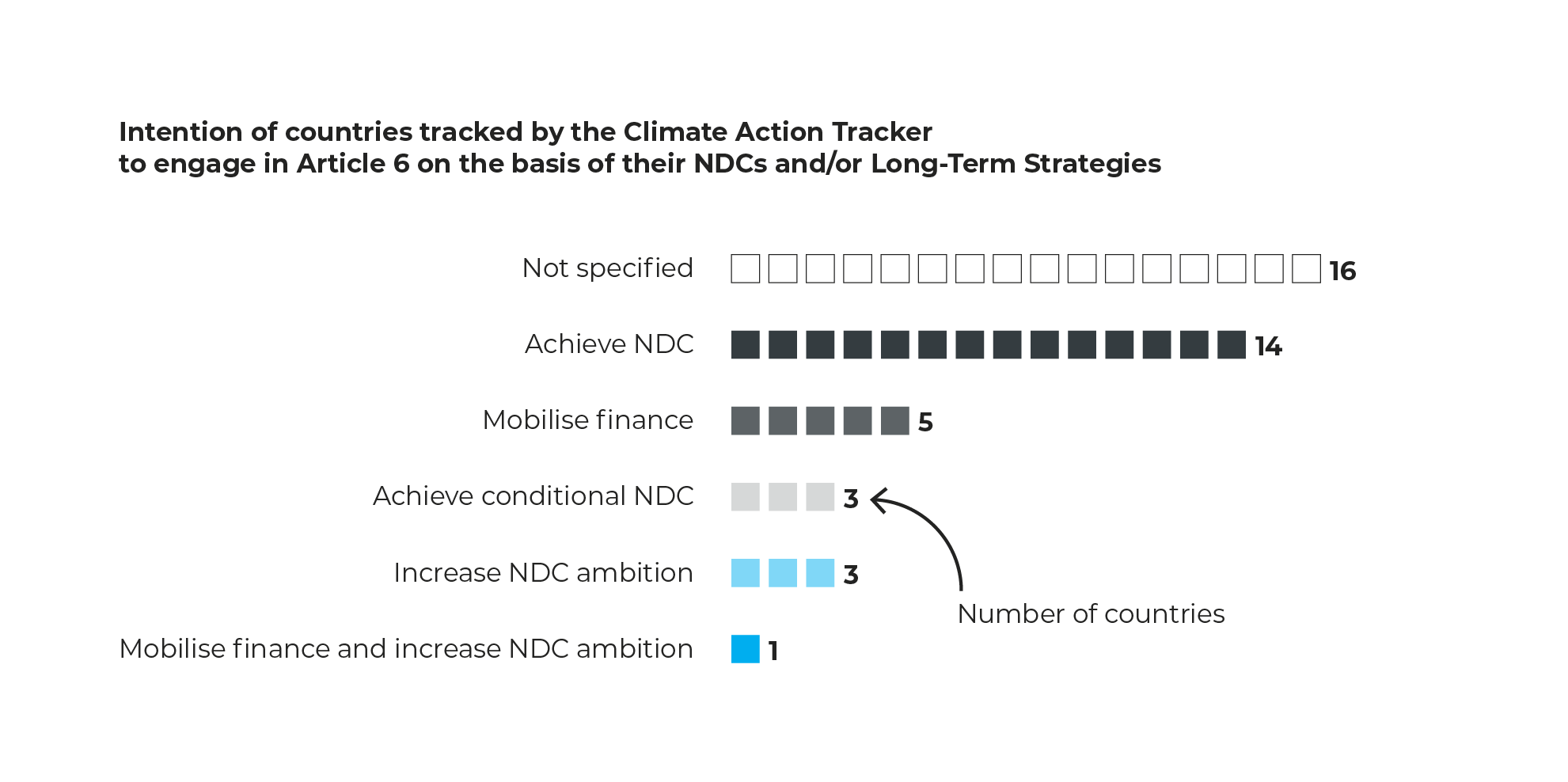
Table 1: Intention of countries tracked by the Climate Action Tracker to engage in Article 6 on the basis of their NDCs and/or Long-Term Strategies
Article 6 risks replacing domestic climate action in developed countries
Article 6 markets have gained momentum in recent years, driven by growing demand from wealthier countries. Key sources of demand include the Carbon Offsetting and Reduction Scheme for International Aviation (CORSIA), as well as government-led initiatives in Japan and the EU. Other countries indicating interest in purchasing Article 6 credits include South Korea, Singapore, Sweden, Switzerland and Norway.
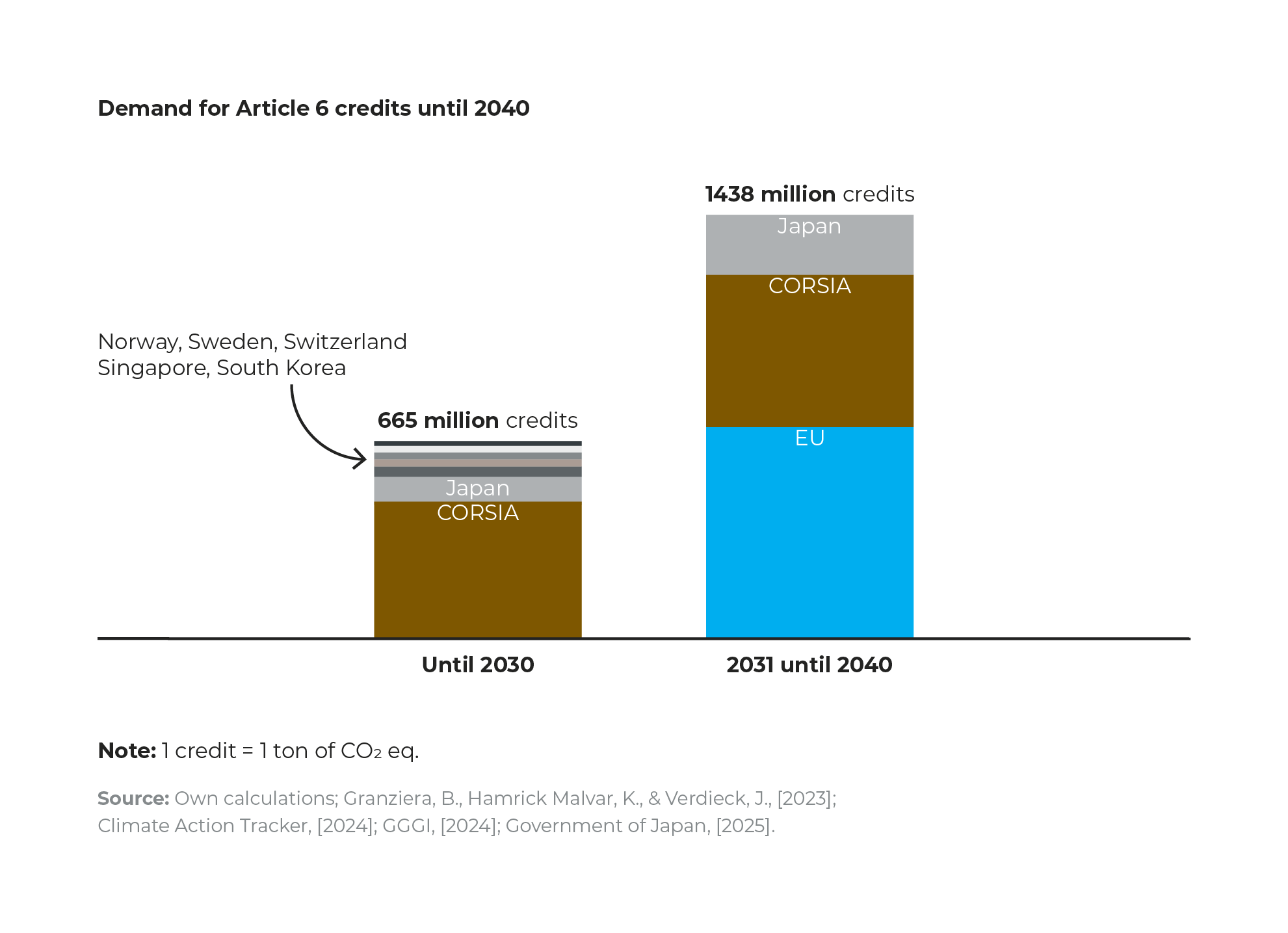
Figure 1: Demand for Article 6 credits until 2040* (Source: (own calculations; Granziera, B., Hamrick Malvar, K., & Verdieck, J., 2023; Climate Action Tracker, 2024; GGGI, 2024; Government of Japan, 2025) (One credit represents 1 ton of CO2 eq.)
It remains unclear whether these countries are using Article 6 to raise overall climate ambition or whether credits are used as a substitute for action at home. To assess this risk, we compared buyer countries’ stated intentions to use Article 6 with their climate action ratings under the Climate Action Tracker. Except for Norway, all countries with a possible or clear intention to engage in Article 6 are rated as ‘insufficient’, ‘highly insufficient’ or ‘critically insufficient’. This suggests that the countries most eager to purchase Article 6 credits are often those least aligned with emissions reduction pathways consistent with limiting warming to 1.5°C. It raises concerns that Article 6 could become a substitute for, rather than a driver of, stronger national efforts.
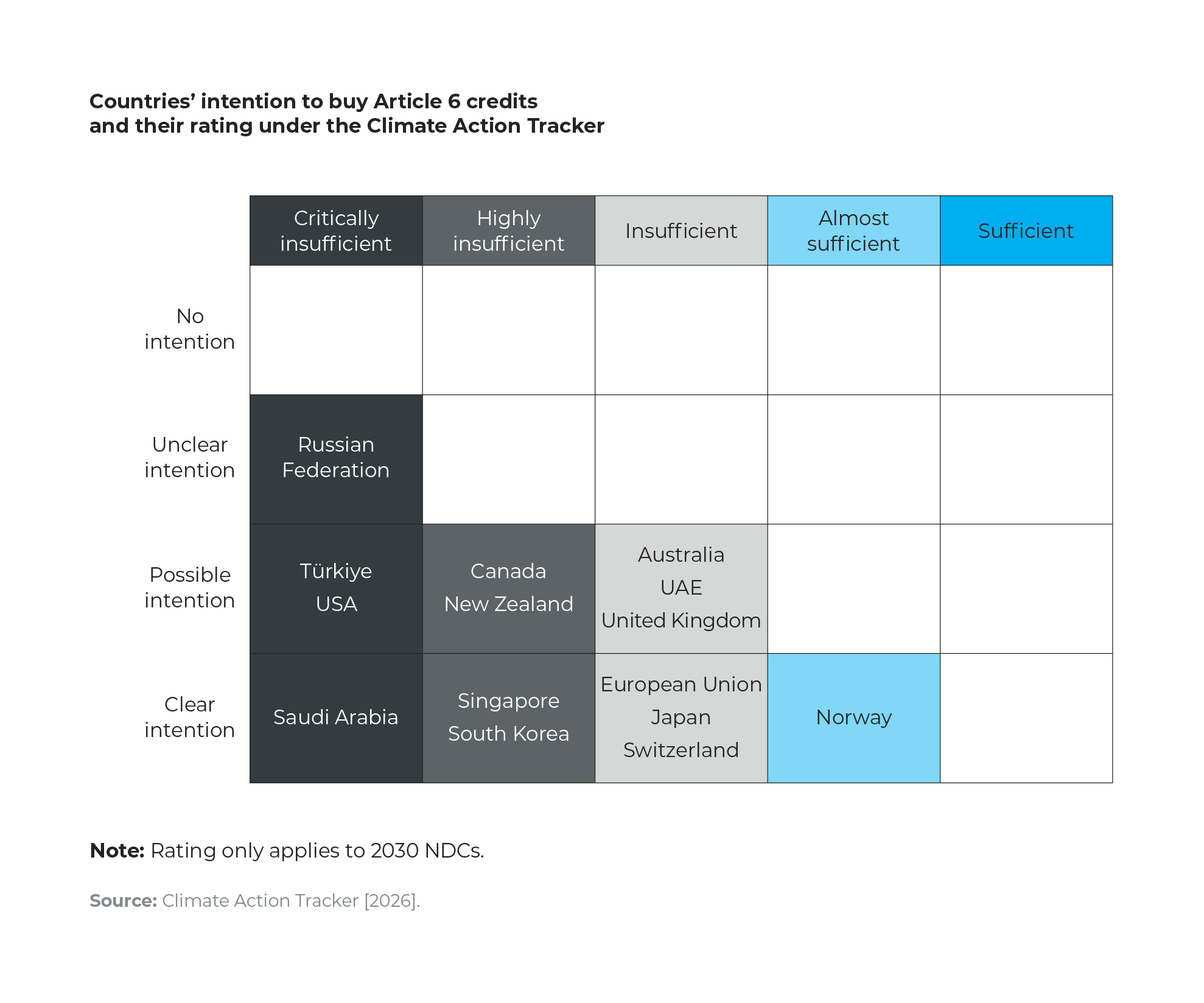
Table 2: Countries’ intention to buy Article 6 credits and their rating under the Climate Action Tracker
We took a closer look at three Parties to the Paris Agreement – the EU (2040 target), Switzerland (2035 NDC) and Japan (2035/2040 NDC) – to assess whether their engagement in Article 6 has led to an increase in ambition. Where such an increase was not demonstrated, we examined how far Article 6 is being used as a flexibility instrument and how much additional domestic emissions this flexibility could allow.
The EU
For the EU, the recent decision to include in its 2040 target an ‘appropriate contribution through high-quality international credits under Article 6 of the Paris Agreement of up to 5% of the EU's 1990 net emissions’ marks a significant shift in its position. While the EU argues that Article 6 enabled agreement on a 90% reduction target for 2040, overall climate ambition has not increased as the EU’s net zero target by 2050 remains unchanged.
The flexibilities introduced through Article 6 are considerable. Over the 2036-2040 period, we assume that more than 700 million credits will be purchased on the international market. A 5% adjustment may sound small, but in practice it allows emissions in 2040 to be roughly 50% higher than under a purely domestic pathway. This could undermine the EU’s ability to meet its 2050 net-zero target.
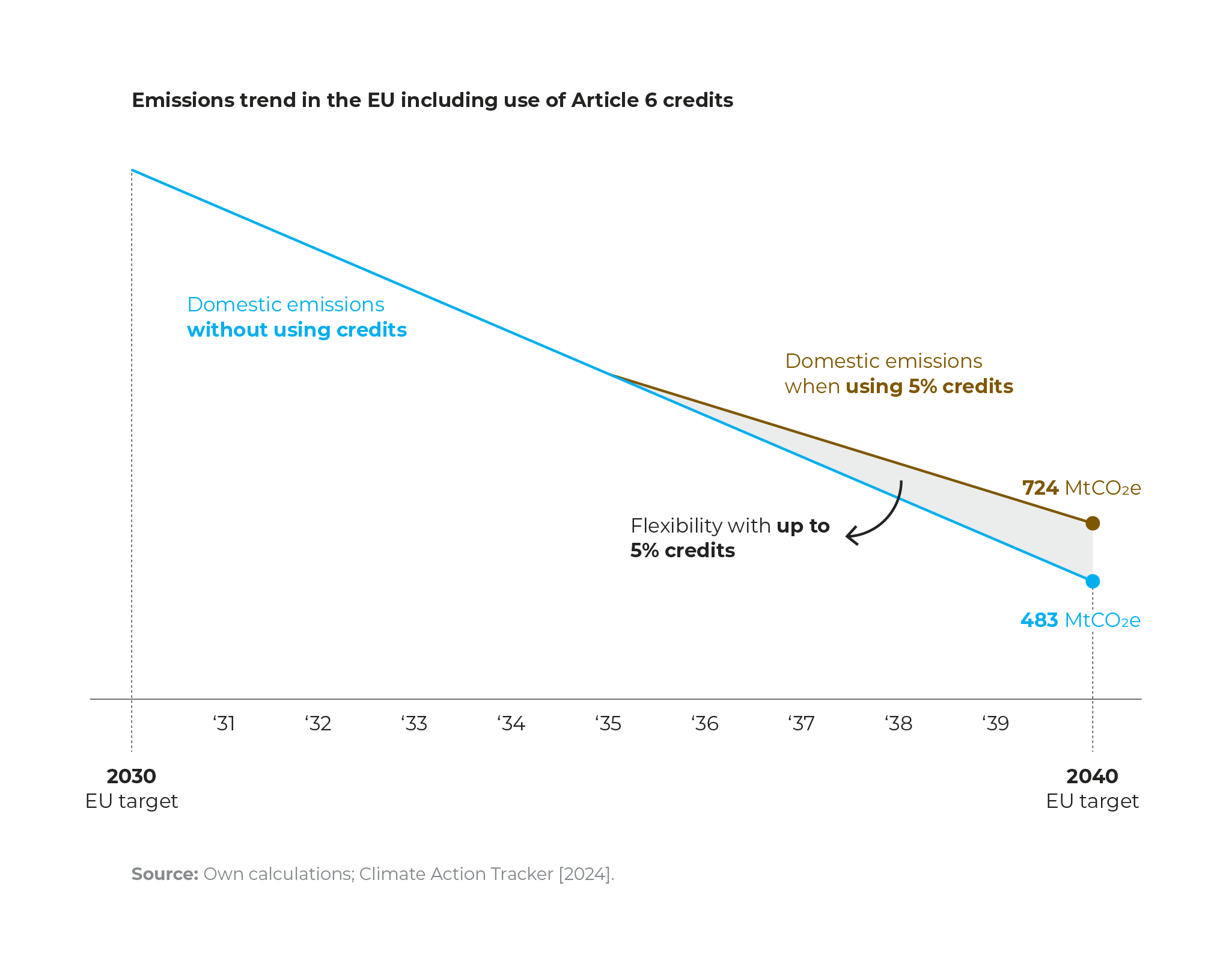
Figure 2: Emissions trend in the EU including use of Article 6 credits
Assumption: In 2040, the EU allows the use of credits equalling an amount of 5% of 1990 emissions. We assume a linear increase of credits throughout the NDC period, starting in 2036 and ending at 5% in 2040 (Own calculations and Climate Action Tracker, 2024).
Switzerland
In Switzerland, the flexibilities introduced through Article 6 are also significant. Over the 2025-2040 period, we estimate that almost 150 million credits will be purchased. Switzerland requires that two‑thirds of emissions reductions be achieved domestically – a third may be met through international credits. With this ‘one‑third’ assumption, Switzerland’s emissions in 2040 can be twice as high as under a purely domestic pathway. While one‑third may appear modest, it creates significant flexibility on the path to 2040 and raises questions about the credibility of Switzerland’s long‑term net‑zero trajectory.
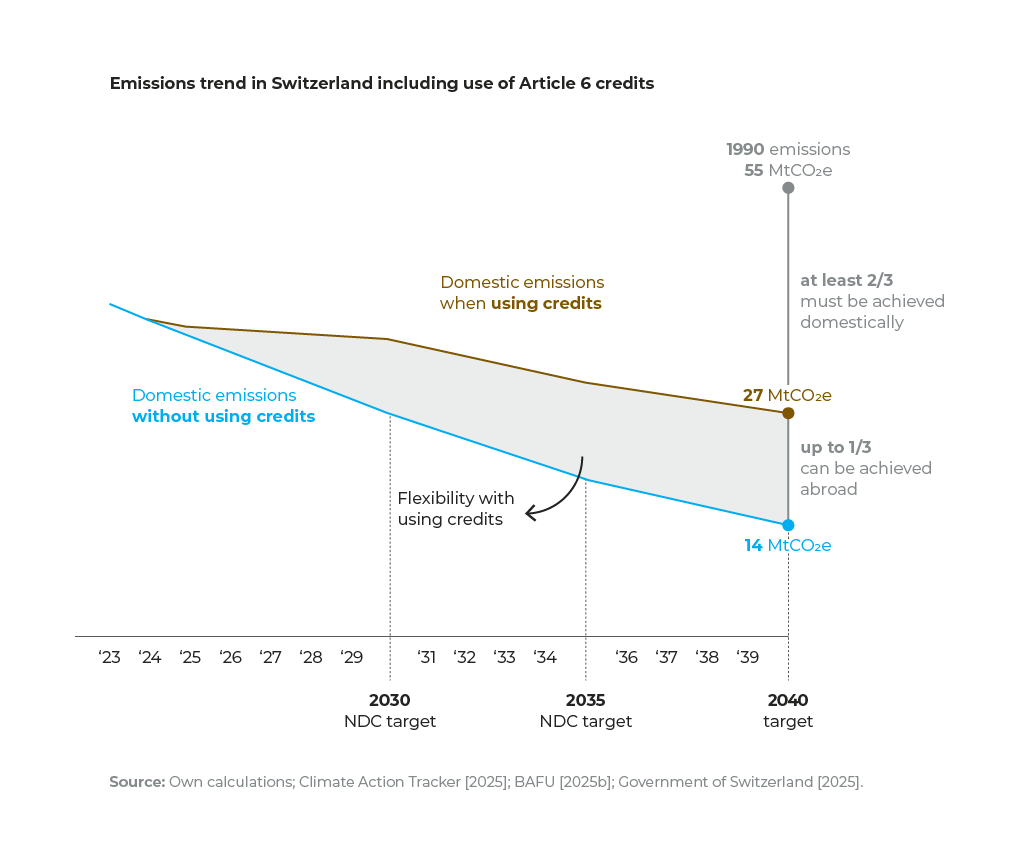
Figure 3: Emissions trend in Switzerland including use of Article 6 credits
Assumption: 1/3 of the NDC reduction targets can be achieved abroad thorough credits (BAFU, 2025b). We assume a linear increase of credits throughout each NDC period, starting in 2025 (Own calculations and CAT, 2025). Official reduction targets are -50% by 2030, -65% by 2035 and -75% by 2040 compared to 1990 levels.
Japan
In Japan’s case, the flexibilities introduced through Article 6 are more limited. Over the 2020-2040 period, Japan intends to acquire around 200 million credits through its Joint Crediting Mechanism (JCM), with 100 million to be reached by 2030 and 200 million by 2040. Japan does not specify a percentage share of reductions to be achieved through credits. However, our calculations indicate that Japan could purchase around 25 million credits in 2040, corresponding to an estimated 7% increase in effective emissions compared to a purely domestic trajectory.
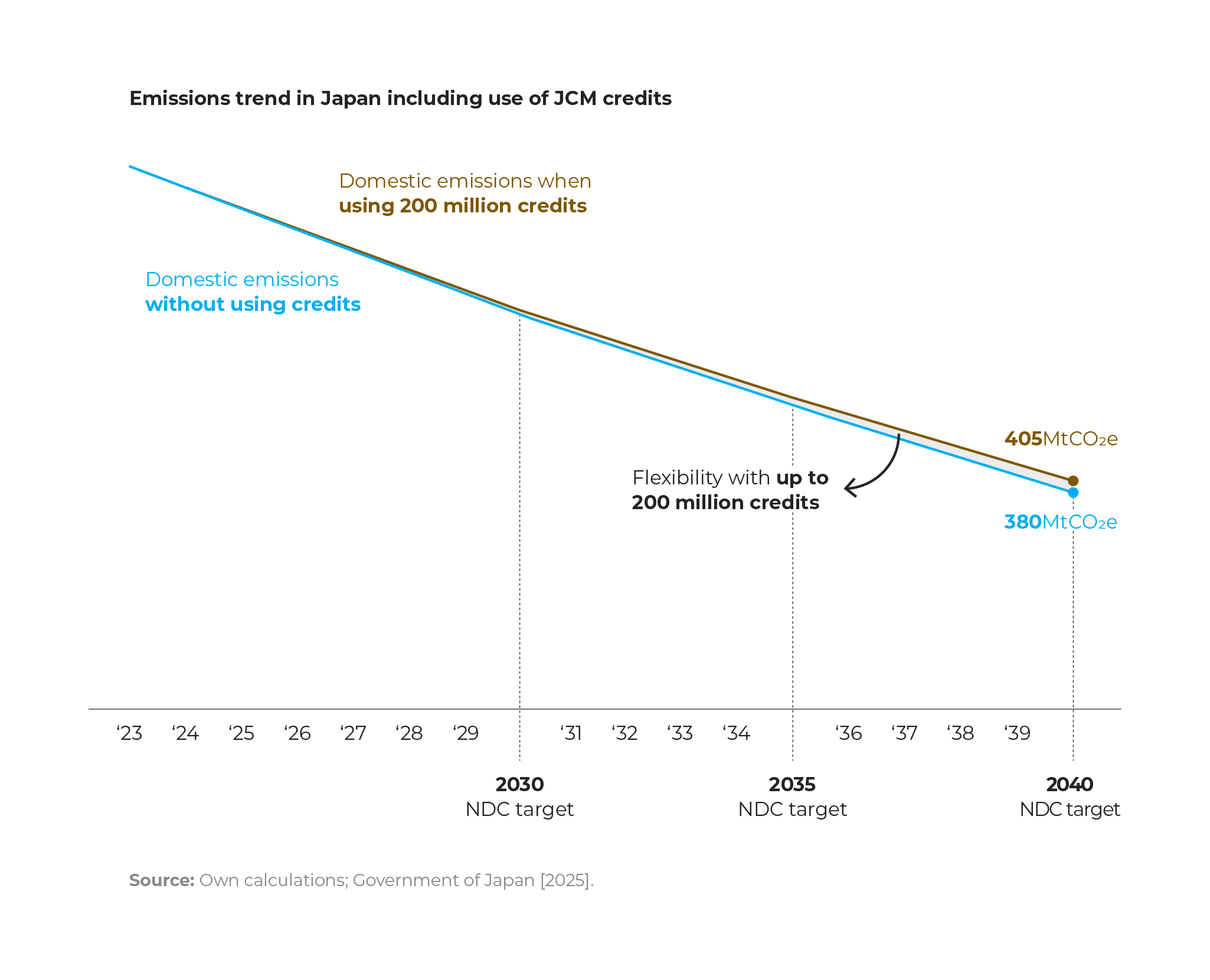
Figure 4: Emissions trend in Japan including use of JCM credits
Assumption: Japan has a cumulative target of 200 million credits until 2040 (Government of Japan, 2025). Here we assume a linear increase of annual credits, starting at 0 credits in 2023 and ending with 25 million in 2040. This leads to a cumulative volume of 200 million from now to 2040.
Pressure on developing countries and equity implications
While growing demand for Article 6 credits among developed countries risks undermining climate ambition, supply-side dynamics may also work against higher ambition. Article 6 credits are expected to be generated in developing countries, creating potential tensions between credit exports and domestic climate targets.
When developing countries strengthen their NDCs, they should use these emissions reductions to meet their own targets, leaving fewer mitigation options available for sale under Article 6. This limits their ability to generate credits for international markets. In practice, credit generation can therefore directly compete with their need to meet and strengthen their NDCs.
Even where countries can fulfil their current NDCs, Article 6 still may conflict with the Paris Agreement’s requirement to progressively increase ambition over time. Therefore, it remains highly uncertain whether such large volumes of credits can be produced without undermining seller countries’ own climate targets.
In addition, high demand for Article 6 credits risks reinforcing existing imbalances between developed and developing countries. Ultimately, this raises questions of equity: developing countries that bear the least responsibility for the climate crisis may be expected to generate additional emissions reductions for sale, allowing wealthier countries to delay or reduce domestic mitigation efforts by purchasing credits.
Towards Paris-aligned engagement with Article 6
The most important step in aligning Article 6 with the objectives of the Paris Agreement is for buyer and seller countries to strengthen domestic climate action. According to the latest UN Gap Report, updated NDCs have had only a limited impact on closing the emissions gap for 2030 and 2035, and global warming is still projected to exceed the Paris Agreement’s temperature goals. In this context of already insufficient global ambition, Article 6 should not be used as a flexibility instrument and its role should be to complement, not replace, emissions reductions at home.
To prevent Article 6 from undermining ambition and becoming a substitute for domestic action, stronger safeguards and oversight are urgently needed. Greater scrutiny of how countries are using Article 6 is essential, and the current lack of transparency and accountability should be addressed. When governments fail to follow agreed rules and international institutions lack effective enforcement mechanisms, governance gaps will persist and other actors will need to step in to fill this gap.
Notably, there appears to be a growing assumption that academia, civil society and affected communities will step in to act as watchdogs. However, relying on these actors alone is unlikely to provide sufficient oversight to ensure that Article 6 is used to raise ambition rather than substitute for domestic action, given their limited financial and institutional capacity and the absence of a formal legal mandate to enforce accountability. If civil society is expected to play a stronger role, this will require more financial resources and improved access to relevant decision-making forums to enable meaningful scrutiny and influence.